• About

LIVEdigitally

Category Archives: Convergence

OTTCON Wrap Up

Posted on March 8, 2011 by Jeremy Toeman and Greg Franzese

Last week I had the opportunity to speak at the Over-The-Top TV Conference and wanted to quickly share some of my experiences at OTTCON.

Overall, it was an enjoyable experience with many knowledgeable industry experts in attendance. My talk on how the Connected TV space has changed in the last 6 months went well and was written up by Ken Pyle at the Viodi View. His article is worth a read, and discusses many trends in the Smart TV space, including the rise of the second screen. Quoting from his piece:

There are kinks with two-screen interactions that need to be ironed out, as pointed out by Jeremy Toeman of Stage Two. He cited the example of the use-case where multiple people are watching television and the one, whose smart phone is controlling the program, goes to the bathroom, effectively taking the remote control with him. Similarly, who is the master, when multiple people are trying to control the second screen from their respective personal media devices? This could portend a new generation of “remote control wars”.

Jeremy Toeman also gave designers some good tips, including:

* Lean back means “passive experience”.
* 2nd screen should have all the text heavy comments.
* People don’t want to log-in or have passwords on their televisions.

Toeman’s updated his predictions for losers and winners in his session. He cited the big service providers, TV manufacturers and content owners as being among the winners. He suggested that the biggest winner would be the consumer, provided the new features that the over-the-top approach unleashes are not overwhelming.

I couldn’t have said it better myself. Thanks to everyone who attended the Over-The-Top TV Conference and shared their passion for the next generation of TV.

Posted in Convergence, Video/Music/Media, Web/Internet | Tags: Connected Television, Connected TV, Convergence, Jeremy Toeman, Ken Pyle, OTT CON, OTTCON, Over The Top Conference, Over The Top Television Conference, Over-The-Top TV Conference, Smart Television, smart tv, Viodi View | Leave a comment |

My Analysis of Google TV’s Ten Foot UI in Nikkei Electronics

Posted on February 22, 2011 by Jeremy Toeman and Greg Franzese

I recently had the opportunity to critique the Logitech Revue’s ten foot UI for Nikkei Electronics, a Japanese trade magazine that “offers prompt reports, to-the-point commentaries and in-depth analysis on advanced technologies.”

Phil Keys, US Correspondent for NE, approached me for this project. He wanted an expert opinion on how to build a better interactive user experience for the home theater. I have known Phil since my days at Sling and Mediabolic and working with him was a real honor and privilege.

I applied user-centric design principles to grade the Logitech Revue and point out its strengths and weaknesses. My review was then translated and printed up, along with photos of the Logitech UI. Here is a small sample of the article.

Thanks to Nikkei Electronics for the opportunity to deliver Smart TV best practices to a global audience.

Posted in Convergence, Gadgets, General | Tags: google tv, Jeremy Toeman, logitech revue, Nikkei Electronics, Phil Keys, smart tv, Ten Foot Usability, UI/UX | 2 Comments |

An Analysis of Amazon's Free, Unlimited Streaming Video Service

Posted on February 22, 2011 by Jeremy Toeman and Greg Franzese

Starting today, Amazon Prime customers can take advantage of the company’s new, unlimited video streaming service. Amazon Prime Instant Video is free, with a few caveats. Quoting from Engadget:

This is only for paid Prime subscribers, so if you’re a college student or the like with a free membership you’re sadly out of luck. Also it’s US only at this point.

Of course, comparisons to Netflix are inevitable here. Early reports say that Amazon’s catalog of titles is comparable to Netflix, while the quality of Prime’s video has been so-so. Prime Instant Video will have some ground to make up if it wants to compete toe-to-toe with the market leader.

Amazon streaming is missing from a few key set-top boxes, including video game consoles and TiVo.

There are 180 million current generation video game consoles on the market, and they all offer Netflix. So that means that Netflix is in more components, has a larger content library and offers higher quality video.

Which is not to say that Amazon is DOA. Not by a long shot.

It would be interesting to know what the goal of Prime Instant Video is. Do Bezos and company want more people to pay for Prime shipping, or is this offer aimed at getting people used to watching videos on Amazon and – later – purchasing media from their ecosystem?

Amazon can assemble a formidable library of content. They don’t need the same titles as Netflix, but the shows and movies need to be compelling. To win here they need to offer a blend of new releases and older classics (think TNT shows and the kind of programming you chill out with on a Sunday afternoon). Expect the library to mature as the service does.

Amazon could also white label Prime Instant Video and let other content providers offer their videos over the Prime streaming media center. The troubled Blockbuster brand could find new life here as a streaming only service (although at this point we’re not even sure if Blockbuster knows what streaming video is).

Finally, Amazon needs to get on as many pieces of hardware as they can. If people can only use Prime Instant Video on their desktop, it will have limited value. One of the first goals needs to be getting on gaming consoles, mobile devices and televisions. Again, this is an attainable goal, especially for Amazon.

I have always maintained that there can be more than one “winner” in the streaming media wars and there is certainly room for Amazon’s service to grow alongside Netflix. While the two services will probably compete for some customers, one does not have to lose for the other to win. It is clear, though, that the stakes of the online distribution game have just been raised.

Posted in Convergence, Video/Music/Media, Web/Internet | Tags: amazon, Amazon Prime, Amazon Streaming Video, Amazon Video On Demand, blockbuster, Convergence, Engadget, Jeremy Toeman, Prime Instant Video, smart tv, Streaming Video | 2 Comments |

Yet Another Cord Cutting Stumble

Posted on February 15, 2011 by Jeremy Toeman and Greg Franzese

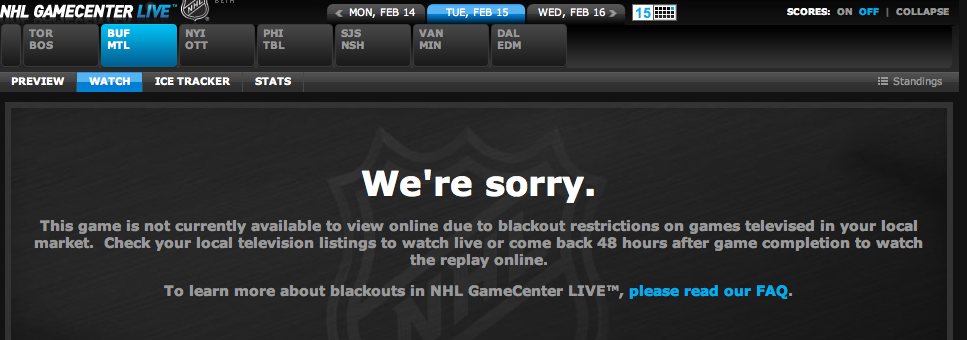
For the third straight season, I signed up for NHL GameCenter to watch Montreal Canadiens games and so far the experience is a good one ($160 for 82 games is a pretty great deal, although offering 40% off a season that is 60% over is certainly questionable). I also have the sports channel Versus through my cable subscription, and they broadcast around 8 Habs games per season, which should mean more hockey for me (yay!).

But unfortunately, that isn’t what winds up happening. In fact, I get less hockey. Because Versus has the rights to air certain Habs games in my local area, they are blocked out on NHL GameCenter for two days (see above, infuriating pic). What that means, then, is that if I forget to DVR the Versus game at my home, the footage is unavailable to me for 48 hours, even though I have paid to watch the game on two distinct platforms. And I don’t always remember to set a recording, given state of the art hockey schedule on the Versus site (so easy to read!). There is nowhere to go on Versus or on NHL GameCenter to watch the game while it is blacked out. This makes no sense. I can sort of understand blacking out the NHL GameCenter footage during live play (sort of), but once the game is over, the online version should be available to everyone who paid into it. In my opinion, the best way to grow the sport is to show more hockey, not less.

These media blackouts need to go the way of rabbit ear antennas. In an era of streaming online content, DVRs and smart, mobile media players, locking paying customers out of content for any length of time is silly. Someone needs to figure out a way to deliver out of market games in a timely manner so that “blackouts” become a thing of the past. These antiquated media restrictions show that cord cutting is far from a reality at this time. This is an issue facing technology and media companies, as well as the sports world.

Blackout rules were a bad idea when they were first conceived in an effort to make people go to the stadium and they are even more ludicrous now.

Posted in Convergence, That's Janky | Tags: Blackout, Digital Media, habs, Hockey, Jeremy Toeman, Media Blackout, Montreal Canadiens, NHL, NHL GameCenter, Streaming Sports, Versus, VS | Leave a comment |

Why 2011 Won't be the Year of Cord Cutting

Posted on January 1, 2011 by Jeremy Toeman

I love the vision of cord cutting.  I hate it’s reality.  In reality, other than for the technically savvy and people under the age of 25, cord cutting just makes TV-based entertainment really really hard.  For the rest of us, it’s simply easier to deal with the cable/sat companies we tend to dislike, remain grumpy, and watch anyway.  I originally posted the following as a long comment on this piece at NewTeeVee, then decided it was “blog-able”.  Read the original post first prior to my rebuttal, otherwise this makes little-to-no-sense…

Janko,

I enjoyed reading your post, but one opening question – Your predictions are “an option embraced by a large number of consumers” and “we’ll end the year with a substantial loss of subscribers”. I ask – what does this mean?  Is a million households “substantial”?  Is ten thousand a “large number”?  This distinction matters quite a bit.
While I appreciate the vision of cord cutting, the simple reality check is this – the only market segment truly ready to “cord cut” is new college grads who don’t currently have cords.  By and large there are no viable ways to get rid of a real cable/sat service that mainstream consumers can adopt.   I maintain that the only thing truly dissatisfying about “cord” services today is the visibly notable compression in HD signals (it’s ridiculous).  And now for a specific rebuttal to your points:
The economy: when the market actually crashed and unemployment spiked, cord cutting didn’t happen.  Why would it happen 2 years later with a more stable economy and more ppl back to work?
Netflix: I love me some Netflix, but it’s far from sufficient to cut anything.  Let’s face it, the selection for streaming is still so-so (at best) and nowhere near close enough to replace TV.
Retrans/fees: Consumers, for the most part, have no idea, and this is an industry issue, not likely to cause behavior changes.
New devices: For complete disclosure, I am biased ON the side of those who make these devices (in fact, I’m probably tied to more cord-cutting related ventures than anyone other than the guys making the chips and codecs!).  And I am 100% certain that there’s not a single one on the market today that’s compelling enough for mainstream cord cutting (not debating which is better, etc, merely stating the obvious regarding the needs of early adopters and niche techies vs the mainstream).  To be clear, I’m not voicing any opinion on the quality of the products (though I have many), they just aren’t focused on mainstream users yet.
TV everywhere failure: Inertia is actually on the side of the cable industry.  They’ll continue to improve the service to “Acceptable” levels, and that’ll stifle any other innovation from having a real chance.
Bottom line is cord cutting is one of those things that sounds great right now, just like moving to Canada when Bush got re-elected in 2004.  But in pragmatic terms, it’s just a major pain in the ass (though I am actually working on solving that problem as well, but that’s for later).  I’ll put my chips on the “2015 or later” box.

ps – happy new year, my resolution, again, is to blog more.  again.

Posted in Convergence | 4 Comments |

Is the Smart Phone also a Smart Remote Control?

Posted on November 5, 2010 by Jeremy Toeman

photo source: Engadget. markup: JT

Over the past few months I’ve seen tons of speculation, demos, and implementations of companies building apps and technology to turn smartphones into remote controls.  Now I get the vision, and yes, for some folks, this is going to be a wonderful marriage of technologies.  But when I say “some” I mean few.  I just don’t think people are really thinking it through in an actual home with real people.

Here’s what I think is going to happen:

  1. User downloads smart remote app to phone
  2. User manages to get said app working
  3. User controls TV with phone
  4. User is psyched, declares new configuration as “hella cool”
  5. One of the following occurs:
    1. Phone battery dies terribly rapidly due to persistent wifi connection.
    2. User takes remote control to bathroom during pivotal moment of show.
    3. Phone call during even more pivotal moment of show.
    4. etc
  6. User goes back to using regular, reliable remote.

Sounds great on paper, but I think it’s one of those problems that people aren’t going to typically face until they actually run into issues like I describe above.  But once they do, the safe prediction I can make is they stop using it that way.  For more, here are the 9 reasons a smart phone makes for a dumb remote, in my latest column at Crave on CNET.

Posted in Convergence, Mobile Technology, That's Janky | Tags: remote control, smartphone, usability | 2 Comments |

How-to: Make a Better Boxee Box App

Posted on September 17, 2010 by Jeremy Toeman

In part 2 of our series on how to make better ten foot user experiences for PC/TV/Internet convergence devices, we take a look at Boxee Box apps.  The Boxee downloadable app for Windows/Mac/Linux is pretty popular, and has apps from tons of different sources.  In the Boxee Box by D-Link (full disclosure: I have a professional relationship with them, which has nothing to do with this post), however, the usage model is probably going to be quite different than the computer-based download.  The user experience for the embedded environment, plus a remote with limited (though very cool) keyboard, and no mouse interaction, combined with a changing user demographic, means a different way to think about apps is required.  Hopefully a lot of app developers are realizing these differences, and beginning to update their apps in advance of the product launch this fall.  If not, here are some tips to help get you going!
  1. Avoid Input Fields At All Costs
  2. Create Consistent Remote Interaction
  3. There is no Back Button
  4. Make it Move!
  5. Redirect for Account Creation
  6. Include a “Sit Back and Watch” Mode
  7. Your Boxee Box App CANNOT Be “Your Website Only Way Bigger”
  8. Keep Your Menus Visible When Needed!
  9. Your App Needs a Social Life
  10. HD is Pretty

Click here for the details.

Click here for the Top 10 Tips to make a better Google TV Site.

Posted in Convergence, Guides | Tags: apps, boxee, boxee box, boxee box by d-link, product experience, ten foot UI, UI/UX | 1 Comment |

How-To: Make a Better Google TV Site Experience

Posted on September 16, 2010 by Jeremy Toeman

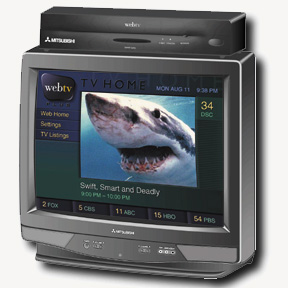
Over at the Stage Two blog we’ve decided we’ll put up a lot more convergence/usability/experience advice blog posts.  First one went up today regarding 10 Essential Tips to Build Great Google TV Sites.  Kind of a funny start to the series, since I’m not a big proponent of the “1.0” version of Google TV, but since it’s probably coming to market pretty soon, I felt the timing was relevant.  The reality check here is I’m seeing a *massive* repeat of the WebTV era, wherein companies made faux “ten foot versions” of their web sites, but didn’t actually re-orient or re-engineer them to be “TV versions”, which are two very different things…

Summary of the tips:

  1. Avoid Input Fields
  2. Incorporate Animated/Moving Backgrounds
  3. No Tiny Fonts
  4. Use The Entire Screen
  5. Site Navigation Should Be Via Remote
  6. Google TV CANNOT Be Your Website Only Way Bigger
  7. Performance is Critical
  8. Choose Colors Wisely
  9. Do Assume the User Has a Computer
  10. KISS: Keep it Social, Stupid

Click here for the details.

    Posted in Convergence | Tags: google tv, googletv, revue | 2 Comments |

    Why the Mac Mini is not, at all, an Apple TV

    Posted on June 16, 2010 by Jeremy Toeman

    Lots of musing yesterday that the new Mac Mini is a “Apple TV in disguise.”  It’s not.  Here’s why:

    1. Price
      There’s a world of difference between seven hundred and one or two or even three hundred dollars.  This is even more the case in the icing room as opposed to the ipad or mobile devices, where theres no precedent or parallel for the product.  Further people evaluate living room stuff extremely differently, and seven hundo is like buying two xbox 360s.  Too much.  In fact, you can truly skip the entire rest of this piece, since this price is an utter non-starter for this discussion.
    2. But what about HDMI?
      Just because the product has hdmi doesn’t mke it a living room product.  Sure front row or Boxee will have that effect, but there’s a radical difference between a purposeful and incidental use case for a device like this.  Hdmi is there because it’s replaced dvi as the digital video standard, and because a huge screen does make a beautiful monitor.  An interconnect does not alone a product make, otherwise I’d be comparing the Mac Mini to a router because it has an Ethernet port.
    3. Software
      Per the above comment, today it’s front row or nothing, from apple direct.  Yes, users can download Boxee or plex, but to think consumers en masse will throw down seven hundred dollars for this solution is way off the mark.  For that purpose, they’d just buy an apple tv, or a roku or a wdtv, etc.
    4. But what about New Software?
      Okay, it’s fairly naive of me to say the future of this scenario is the existing version of front row.  Obviously they’ll rev it, and lets assume the rev is solid.  Per all the above points, it doesn’t matter how much better it is.  It’s not about a “better experience” when we are talking the price point.
    5. The Apple Way
      Apple makes products with high margins, mass appeal, and excellent software.  A seven hundred dollar apple tv is only one of those things, and at best can get to two.  Why would they make such a bizarre strategy shift here?  It’s not, at all, the apple way.  Far from it.
    6. Consumers and boxes
      Most consumers don’t buy extra boxes for their living rooms.  They buy TVs, game consoles, and media playback devices (the cheapest of the bunch).  When they do buy add ons, they tend to be under $300, such as the slingbox, roku, or wdtv.  In these cases, the value add for the price point is clear.  So looking at the new Mac mini from the lens of ‘what new content or services does this bring to the living room?’ the answer is practically nil.
    7. Consumers and content
      Cable tv (and by that i include satellite and other existing offerings) is, on average, pretty good.  The average American has access to tons of content, both on broadcast and on demand systems, not to mention whatever they are dvring.  Throw in a dvd player and a game console, and the content universe is quite outstanding.  The quantity of people who truly want to throw away their existing stuff is really really small.  Its not to say there isn’t room to add in more, but its not seven hundred dollars worth more in any consumers’ eyes. For a box that expensive to earn a spot in the living room, it must supplant existing content offerings in such a way that consumers clearly perceive the value.  So not only is a brand new software package a requirement, but a massive increase in content, especially free content, is as well.

    But What If?

    If apple discontinued the apple tv line, this would have a shift, but only a minor one.  In that scenario, I’d imagine the opportunity truly shines for google tv products and the Boxee box by dlink (full disclosure: I consult with dlink), as they will offer similar value propositions but at steeply discounted prices.  And unlike the comparisons between the iPad and the janky tablet rivals, these other products are far more likely to show promise and value.  Still doesn’t add up.
    And now for something completely different.
    A man talking about the same topic, in video form:

    Watch live video from Jeremy Toeman on Justin.tv
    Posted in Convergence | Tags: Apple, apple tv, boxee, dlink, hdmi, mac mini, roku, wdtv | 6 Comments |

    Party Mode TV: great until the inevitable bathroom break

    Posted on June 3, 2010 by Jeremy Toeman


    Watch live video from Jeremy Toeman on Justin.tv

    For context, one of the “grand visions of the future” is how people from around the world will be able to watch TV “together”. It’s a wonderful idea except that the visionaries behind it seem to forget the pragmatic realities of how people actually watch TV…

    Posted in Convergence | Tags: google tv, internet tv, party tv, smart tv | Leave a comment |

    Google TV vs Apple TV? I don't think so…

    Posted on June 2, 2010 by Jeremy Toeman


    Watch live video from Jeremy Toeman on Justin.tv

    Stories I referenced:

    • Why Google TV As A Platform May Push Apple To Build Televisions
    • Google TV: Good Idea, Poor Initial Execution (this is the article I misattributed to Harry McCracken on the podcast – should’ve been Avi Greengart)
    • Steve Jobs: Google TV Will Go the Way of TiVo and Roku
    Posted in Convergence | Tags: android, apple tv, google tv, HTC, interactive tv, logitech, smart tv | Leave a comment |

    Thinking about Googling my TV

    Posted on March 19, 2010 by Jeremy Toeman

    Google, Intel, and Sony have apparently teamed up (and Logitech too) to develop an Android-based platform for interactive television. Let me start my post with some important background points and disclosure:

    • I was a cofounder of Mediabolic, a startup who built a platform for connected devices.  While there I designed about a dozen “convergence” products (one won a best-of-CES award), and the company eventually got acquired by Macrovision.
    • I was an early employee at Sling Media, where I was responsible for developing the Slingbox (another best-of-CES award).
    • I once interviewed at Google for a position in a “google TV” role, but didn’t feel it was a really great fit for me personally (not to mention the commute).
    • I am currently involved with Boxee.TV, a startup in a highly-related field. There is some amount of overlap here, though that is in no way related to this blog post.
    • I’ve also worked with VUDU, Clicker.com, DivX, and others on “future of TV” systems, services, and products.
    • I was on the original working group committees for UPnP (AV) as well as DLNA (even before it was called that).

    Through the above experiences, I have seen a lot of failure and some success in the “connected TV” space.  But mostly failure.

    It’s a space where techies dream, entrepreneurs try, and companies fail. The list of failed convergence companies is notably longer than the list of successes. It’s a field where even Apple, the current king of the world when it comes to entertainment technology, can’t get a reasonable foothold in the home.

    Most of the failure is due to deeply entrenched systems heavily controlled by huge corporations with little interest or need to innovate.  While we can yell and scream about how bad a job the Cable/Satellite companies are doing at future planning, the blunt reality is it’s hard to argue that it’s necessitated.  These megacorporations can drag their feet, and deploy mediocre DVRs and HD services, and consumers (for the most part) are satisfied with their experiences.  Further, due to their current business structures, the concept of opening up the market to third-party devices, content, services, or applications is not just daunting, but likely unprofitable.

    When I consider the opportunity in the digital home, I am convinced it cannot come about by directly competing with traditional broadcast models. Broadcast TV, and all the services with it, are generally easy to use, convenient to pay for, and effectively “good enough” for most people – making “better than current TV” offerings a significant challenge to bring to market.  Historically, the only thing to attract the attention of consumers beyond their existing entertainment solutions are:

    • Transformative content playback experiences. From VCR to DVD was one example, and from standard definition to HDTV is another.  The key word here is transformative – it can’t just be “better quality”, as evidenced by virtually all other introduced formats and technologies based around content.
    • Notably difference content offerings. Again, moving up to HDTV-enabled set-top boxes was a natural flow, game consoles are the other shining example of a successful category.  Boxes that simply deliver “more of the same” or “stuff you can get elsewhere, now get it here (e.g. digital pictures)” are typically not big hits.  Consumers have to see some kind of service that’s worth the extra money.

    Everything else has failed to make a dent.  Most “Internet Set Top Boxes” have been, and will be failures.  The typical logic that brings these products to market goes something like “consumers are about to cut the cables for their Internet content, and really hate watching it on their computers.”  The evidence behind this claim?  It’s in the same folder with the WMD evidence the government started a war for (zing!).

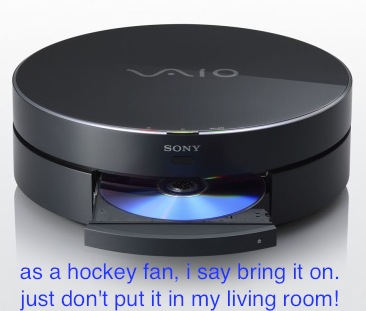
    I’m very curious as to the potential from Google, Intel, and Sony.  Intel has wanted in on the “connected TV” for a long time (disclosure: they were an investor in Mediabolic), and has never really executed very well.  It’s not to say they can’t, but it’s safe to say the space is far far away from their core DNA.  Sony too has stumbled frequently in this space (here’s their version of a convergence device). Logitech? See Sony. And then there’s Google.

    Part of me thinks Google believes that all devices are effectively the same, and their (limited) success in the phone market implies opportunity in the TV market.  Another part of me thinks Google is just so big they take on any sector they see opportunity in.  But most of me thinks Google wants to get firmly entrenched in the biggest advertising market there is – television.  And as hard as doing phones might be, doing TV boxes is much much harder.  Here’s why:

    • Phones play highly restricted media types.  Converged TV devices are expected to play all media types.  This topic alone is probably worthy of a blog post, but trust me when I say – it’s hard.
    • Consumers buy new phones on a recurring basis (multiple times a year in some countries). Consumers replace TVs infrequently, and buy TV “accessory” devices only a couple of times per decade. While the market is huge, it’s hard to get new devices into the home.
    • Carriers are motivated to push new devices and services into the hands of their customers, it’s part of their business model.  TV service providers are not motivated to do so (as discussed above).
    • As much as phones are “closed systems”, a manufacturer is able to purchase equipment and get a device certified and get it on the network without too much involvement by a carrier.  While the path is actually similar (CableCard Tru2Way certification), the realities for both the manufacturer and, more importantly, consumer are much much worse.
    • Again, as stated above, consumers are generally dissatisfied with their phones (a problem unlikely to go away) and are excited about new ones.  Consumers literally dread changing equipment in their living room – even us geeky dads with cool quadrophonic sound.

    Now with all that said, I’m truly excited about the future of converged entertainment in (and out) of the home. I remain mostly cynical about seeing any real change anytime soon.  I think there are a few companies who have built the right foundation to make some inroads, but I’m hoping everyone involved is prepared to win their “realist” and “slow and steady wins the race”  badges over the next few years-to-decade (or longer).  Can Google be the catalyst of change, or will they just be the next in the long list of companies who tried and missed the mark?

    Posted in Convergence | Tags: android, Apple, boxee, clicker, Convergence, digital home, divx, dlna, intel, internet set top box, internet tv, logitech, mediabolic, set top boxes, sling media, slingbox, sony, TV, upnp, vudu | 12 Comments |
    « Previous Page
    Next Page »

    About

    Jeremy Toeman is a seasoned Product leader with over 20 years experience in the convergence of digital media, mobile entertainment, social entertainment, smart TV and consumer technology. Prior ventures and projects include CNET, Viggle/Dijit/Nextguide, Sling Media, VUDU, Clicker, DivX, Rovi, Mediabolic, Boxee, and many other consumer technology companies. This blog represents his personal opinion and outlook on things.

    Recent Posts

    • Back on the wagon/horse?
    • 11 Tips for Startups Pitching Big Companies
    • CES 2016: A New Role
    • Everything I Learned (So Far) Working For a Huge Company
    • And I’m Back…

    Archives

    Pages

    • About

    Archives

    • January 2019
    • April 2016
    • January 2016
    • December 2015
    • June 2015
    • May 2015
    • April 2015
    • March 2015
    • February 2015
    • January 2015
    • December 2014
    • November 2014
    • October 2014
    • September 2014
    • August 2014
    • June 2014
    • May 2014
    • April 2014
    • March 2014
    • January 2014
    • December 2013
    • September 2013
    • August 2013
    • July 2013
    • May 2013
    • February 2013
    • January 2013
    • December 2012
    • October 2012
    • September 2012
    • August 2012
    • May 2012
    • April 2012
    • March 2012
    • February 2012
    • January 2012
    • December 2011
    • November 2011
    • October 2011
    • September 2011
    • August 2011
    • June 2011
    • March 2011
    • February 2011
    • January 2011
    • December 2010
    • November 2010
    • October 2010
    • September 2010
    • August 2010
    • July 2010
    • June 2010
    • May 2010
    • April 2010
    • March 2010
    • February 2010
    • January 2010
    • December 2009
    • October 2009
    • September 2009
    • August 2009
    • July 2009
    • June 2009
    • May 2009
    • April 2009
    • March 2009
    • February 2009
    • January 2009
    • December 2008
    • November 2008
    • October 2008
    • September 2008
    • August 2008
    • July 2008
    • June 2008
    • May 2008
    • April 2008
    • March 2008
    • February 2008
    • January 2008
    • December 2007
    • November 2007
    • October 2007
    • September 2007
    • August 2007
    • July 2007
    • June 2007
    • May 2007
    • April 2007
    • March 2007
    • February 2007
    • January 2007
    • December 2006
    • November 2006
    • October 2006
    • September 2006
    • August 2006
    • July 2006
    • June 2006
    • May 2006
    • April 2006
    • March 2006
    • February 2006
    • January 2006
    • December 2005
    • November 2005
    • October 2005
    • September 2005
    • August 2005
    • July 2005
    • June 2005
    • May 2005
    • April 2005
    • March 2005
    • February 2005
    • January 2005
    • December 2004
    • November 2004
    • October 2004
    • September 2004

    Categories

    • Convergence (81)
    • Gadgets (144)
    • Gaming (19)
    • General (999)
    • Guides (35)
    • LD Approved (72)
    • Marketing (23)
    • Mobile Technology (111)
    • Networking (22)
    • No/Low-tech (64)
    • Product Announcements (85)
    • Product Reviews (109)
    • That's Janky (93)
    • Travel (29)
    • Video/Music/Media (115)
    • Web/Internet (103)

    WordPress

    • Log in
    • WordPress

    CyberChimps WordPress Themes

    © LIVEdigitally